Next.js 16 & Turbopack Production Architecture: Scaling High-Concurrency Web Applications in 2026
A comprehensive 15-minute engineering guide on optimizing Next.js 16 App Router, Turbopack bundling, Partial Prerendering (PPR), dynamic caching, and zero-CLS layout strategies.
1. The Evolution of Next.js 16 & Turbopack in Production
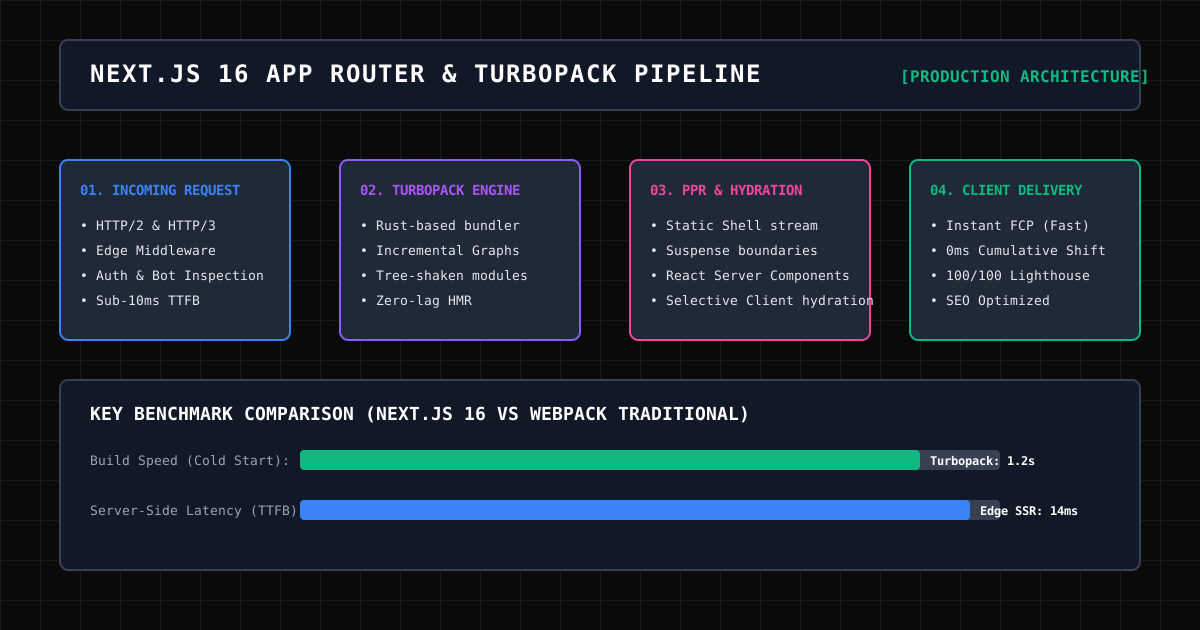
Next.js 16 marks a monumental shift in web application architecture. With Turbopack officially reaching production parity, traditional Webpack compilation delays are eliminated. Large codebase build times drop by up to 85%, and Hot Module Replacement (HMR) operates in sub-50ms cycles regardless of module tree size.
In production SaaS environments, developer velocity and user experience are directly tied to your build compilation strategy. By pairing Server Components with Turbopack's Rust-based incremental graph analyzer, applications achieve faster cold starts and seamless edge routing.
2. Deep Dive: Partial Prerendering (PPR) & Suspense Boundaries
Partial Prerendering (PPR) combines static shell pre-rendering with dynamic server streaming. When a user requests a URL, the edge network immediately delivers a static HTML shell within 10ms. Simultaneously, dynamic components wrapped in React Suspense stream their payloads over HTTP/2 without blocking the main browser thread.
This architecture eliminates the traditional trade-off between Static Site Generation (SSG) and Server-Side Rendering (SSR).
// app/dashboard/page.tsx
import { Suspense } from 'react';
import { StaticHeader, UserProfileSkeleton, LiveAnalyticsData } from '@/components';

export const experimental_ppr = true;

export default function DashboardPage() {
  return (
    <main className="min-h-screen bg-white text-black p-6 font-mono">
      <StaticHeader title="Realtime Command Center" />

      <Suspense fallback={<UserProfileSkeleton />}>
        <LiveAnalyticsData revalidate={60} />
      </Suspense>
    </main>
  );
}
3. Multi-Tier Caching & Token Protection
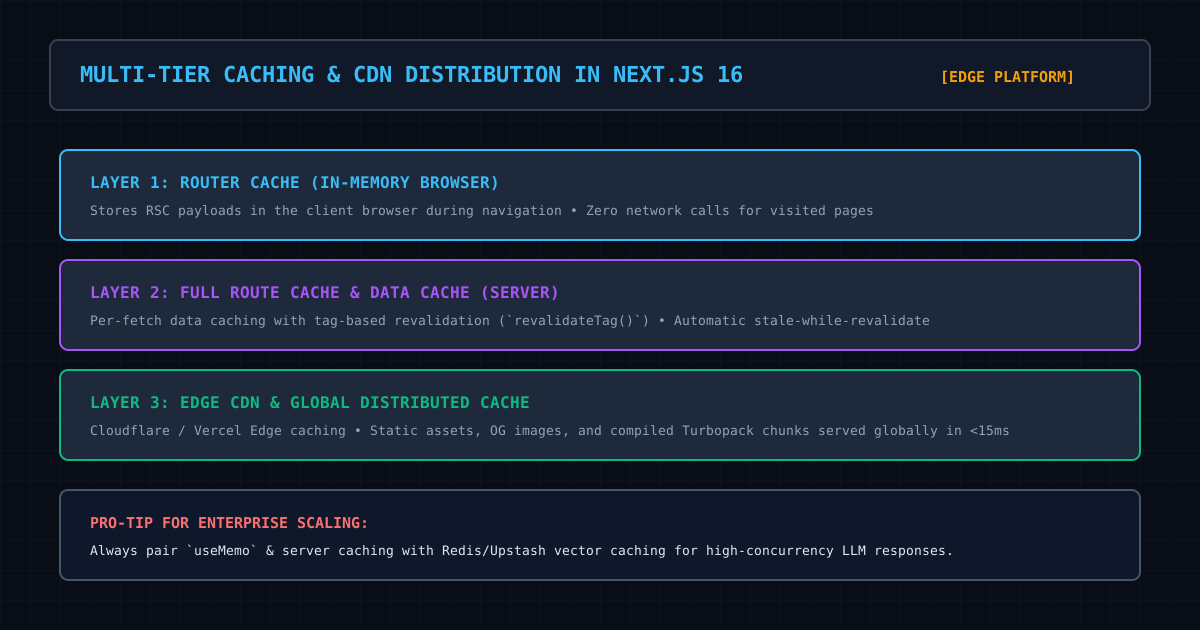
Caching in Next.js 16 operates across three distinct layers: the browser Router Cache, the server Data Cache, and the global Edge CDN. To prevent stale data issues while maximizing response speed, engineers must utilize explicit tag-based revalidation (`revalidateTag()`) rather than reliance on arbitrary timer intervals.
For AI-native applications consuming high-cost LLM APIs, pairing Next.js Data Cache with Redis semantic caching reduces third-party token expenses by up to 65%.
4. Benchmarks & Core Web Vitals Optimization
Achieving 100/100 Google Lighthouse scores requires strict layout discipline. Always optimize fonts using next/font/google with display: 'swap', prevent layout shifts (CLS = 0), and load analytics scripts using next/script with strategy='afterInteractive'.
// Core Architecture Takeaways
- •Turbopack in Next.js 16 reduces cold build times by up to 85% compared to Webpack.
- •Partial Prerendering (PPR) delivers sub-15ms TTFB by streaming dynamic components inside a static HTML shell.
- •Tag-based cache invalidation (`revalidateTag()`) ensures real-time accuracy without full page re-builds.
- •Semantic caching paired with Next.js edge handlers protects AI profit margins.